
Photo credit: hr.ubc.ca
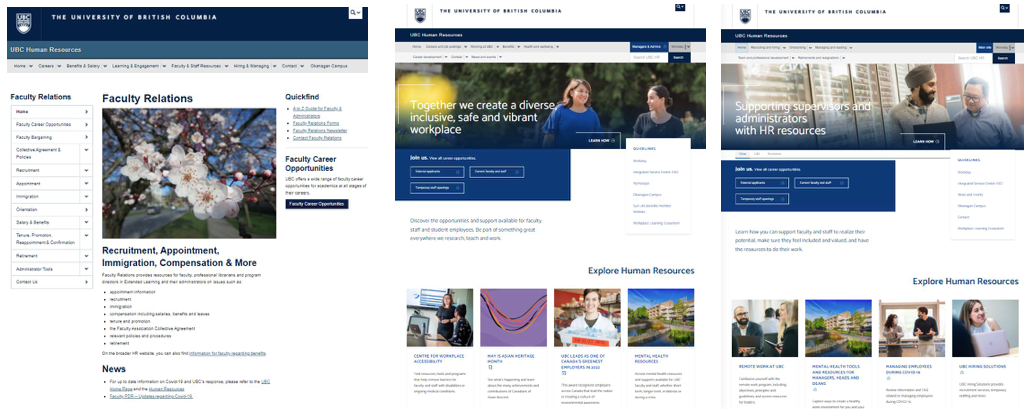
After the launch of the hr.ubc.ca website, there was a lot of feedback from the Faculty Relations community around struggles finding content. The primary users of this content are faculty administrators and faculty heads.
Working with the Faculty Relations team we were able to work together to do user research to better understand how we can position content to better serve them.
User Research
Interviews
In March 2021, there were 11 users interviewed (10 administrators and 1 head). There was a range of experience from 1-20 years working at UBC. There were users from both the UBC Vancouver and Okanagan Campuses.
There were three key themes that came up from the interviews:
- Desire for a quick reference tool to do their job
- Needing confidence in knowing the content they are referencing is up to date
- Needing a clear and consistent experience
The users were also quick to point out that there are so many more places to look for information with the new website. So instead of one section to look through, users had to look through 1 section, they had to look through 2 homepages and 8 subsections.
User Journey Workshops
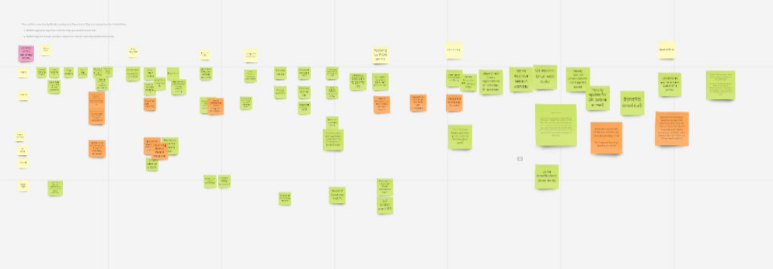
After the interviews, I ran three virtual user journey workshops using Miro to better understand the user journeys of our users. The topics for the workshops were based off the top topics that came up during user interviews. They were also tailored based on the attendees who were participating in the workshop.
Card Sort
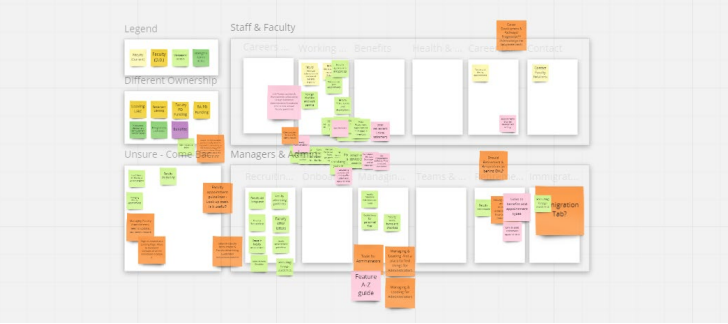
In April 2021, I worked with the Faculty Relations team to conduct a card sort. We were able to move pages that made more sense from a Faculty Relations lens, however we had to work within the existing high level structure due to the intersectionality of the content with other teams.
Treejack Test
Later that month we ran a treejack test for 2 weeks. Due to the size of the Faculty Relations content we were only able to test 11 pages out of approximately 30. This gave us a good sample.
We had 30 participants. The success rate was 30%. After reviewing the paths of all treejack participants there were some clear patterns and opportunities to address this low success rate. This also revealed the data behind the anecdotal feedback around the bigger challenge of the Information Architecture for the website as a whole, specifically for niche areas.
Results
With user research we were able to identify key areas that needed improvement. For the pages that we could update immediately we were able to make quick improvements and for the pages that had site-wide implications we were able to provide a band-aid solution as a temporary way to serve users.
Used pathways to improve findabilty to 80%
There were some pages that did not impact other team’s content so we were able to move that content. Based on analysis of user pathways and where users were inclined to go to find pages we were able to improve the scores of 5 pages that scored less than 15% findability to 80%.
In the end, with these tactics we were able to address the findability challenges of every page. For all the pages we could address at the time of the project, we were able to improve the overall findability from 30% to 80%.
Improved findability with a new Faculty Relations landing page
Users were used to the old version of the website where there was a Faculty Relations section. With information spread out using a staff/faculty lifecycle, users were confused because the staff and faculty life cycle did not perfectly align. By creating a landing page we were able to provide a way to address the confusion while we work out kinks in the main IA as a whole.
After one year of being on the website, this landing page had 12,000 views.

Improved findability with interlinking
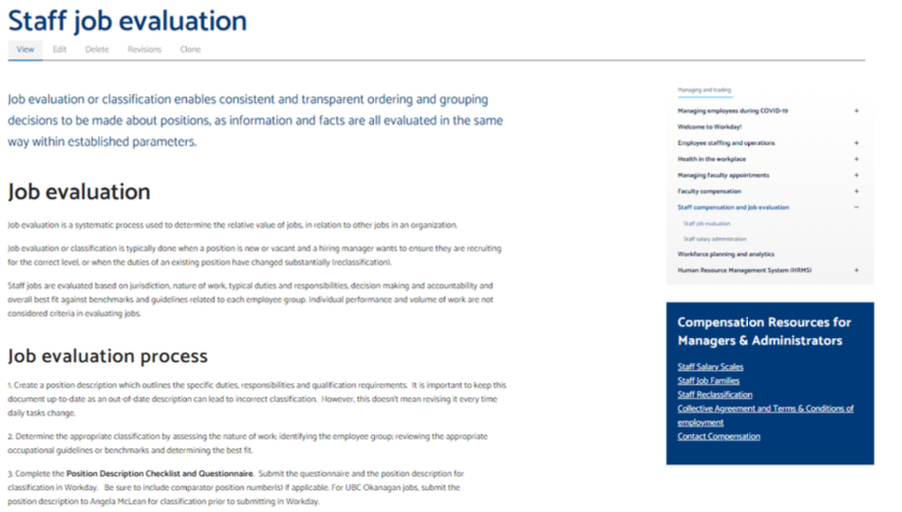
In the short term I was able to improve the interlinking experience by adding various visual cues to link similar content together. For example, if faculty were looking for Faculty job evaluation information and they landed on the staff page, there would be a link to the faculty area underneath the side navigation.
Revisit some areas later
There were two other team’s contnet that intersect with the Faculty Relations content. This will require participation from other teams and will be saved for a future project.
 Natalie Pope